Registered devices & reference atmospheres
No instrument may measure a gust larger than itself without a witness, a brass counterweight, and Form I-4.
Core register
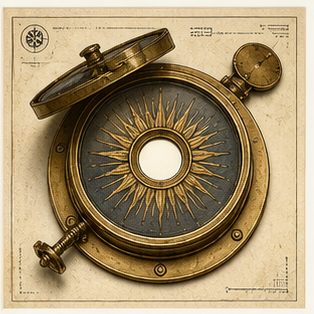
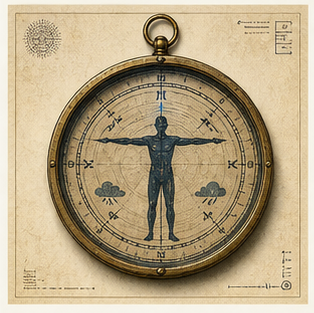
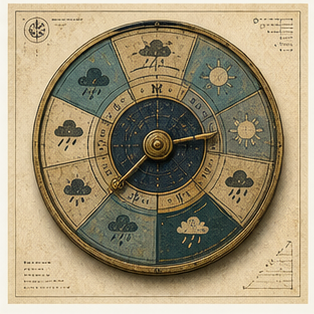
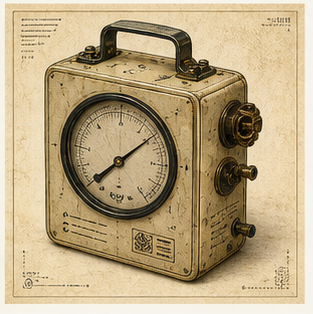
Public barometers
| Station | Location | Reading | Access |
|---|---|---|---|
| PB-001 | Central Annex vestibule | Moderately particular | 08:00–18:00 |
| PB-014 | District 4A tram shelter | Inclined to rain | Always visible |
| PB-022 | Municipal conservatory | Plant-adjacent | Closed Monday |
| PB-031 | Library umbrella return | Scholarly damp | Card optional |
Whistle registry
Registered weather whistles must produce one clear note between F-ish and G-adjacent. Twin-tone whistles require separate registration for the second opinion.
W-11
Roof marshal whistle
Two short notes: approaching breeze. One long note: misplaced lunch.
W-19
Fog locating whistle
Heard only when the fog has already been located.
W-40
Quiet thunder whistle
Silent reference object retained for comparison.
Seven-step calibration sequence
- Place instrument beside the brass reference window.
- Allow both devices to become acquainted.
- Set needle to zero unless zero is occupied.
- Introduce one standard desk breeze.
- Record disagreement in blue pencil.
- Wait one procedural minute.
- Affix the oval seal without covering the weather.
Instrument folklore
Roof technicians maintain that a barometer tapped three times will predict paperwork. The Office neither endorses nor disproves this, though paperwork follows in 98 percent of tests.
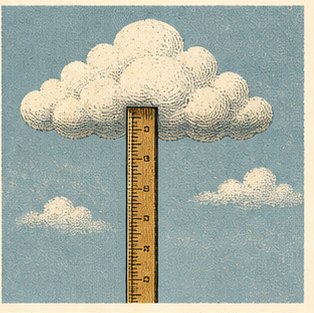
Cloud rulers are stored horizontally so they do not encourage tall weather. Dew spoons are never counted aloud after dusk. The oldest vane, Cockerel 4, is formally addressed as Deputy.